06 April 2020

Day 25


"...one ought every day at least to hear a little song, read a good poem, see a fine picture, and, if it were possible, to speak a few reasonable words." -Goethe

A poem for today: Marge Piercy's "To Be of Use" is full of figurative language (metaphor, simile, personification) that praises those "who do what has to be done, again and again." Thank someone you know who is on the frontlines of the pandemic.

To be of use

The people I love the best
jump into work head first
without dallying in the shallows
and swim off with sure strokes almost out of sight.
They seem to become natives of that element,
the black sleek heads of seals
bouncing like half-submerged balls.

I love people who harness themselves, an ox to a heavy cart,
who pull like water buffalo, with massive patience,
who strain in the mud and the muck to move things forward,
who do what has to be done, again and again.

I want to be with people who submerge
in the task, who go into the fields to harvest
and work in a row and pass the bags along,
who are not parlor generals and field deserters
but move in a common rhythm
when the food must come in or the fire be put out.

The work of the world is common as mud.
Botched, it smears the hands, crumbles to dust.
But the thing worth doing well done
has a shape that satisfies, clean and evident.
Greek amphoras for wine or oil,
Hopi vases that held corn, are put in museums
but you know they were made to be used.
The pitcher cries for water to carry
and a person for work that is real.
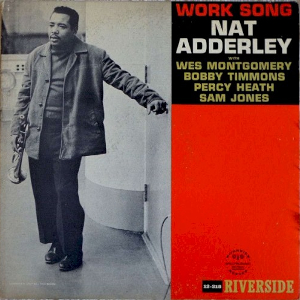
A song for today: Get to work with Nat Adderly's "Work Song." For a blues-rock take on this jazz standard, check out the Buttefield Blues Band's cover from their great East-West album.

Work Song.jpg

Works Cited

Adderly, Nat (1931-2000). "Work Song." Work Song, Riverside, 1960.

Piercy, Marge. "To be of use." Poetryfoundation.orghttps://www.poetryfoundation.org/poems/57673/to-be-of-use. Accessed 6 April 2020.

Pizzi, Rudi. Newburyport Jetty Association.

05 April 2020

Phase 2 Distance Learning

Dear Ninth Grade Students and Families,
Your English teachers miss working with you in the classroom and wish you and your families health and safety during this challenging time.  Although we cannot see each other in person, we want to be a continued support to you as learners and people.
As you know, we have been providing optional enrichment work to you and opportunities for you to communicate with your teacher.  Starting the week of April 6, we will transition to a more formal work program, designed with local and state guidelines in mind. Beginning Sunday, April 5, you will:
  • Check our class page (http://reynolds9h.blogspot.com/) for a chart of assignments each week
  • Spend approximately 30 minutes a day reading and writing to complete assignments
  • Submit your work on a Google document every Friday
  • Connect with your teacher and classmates through optional emails and discussion pages
The English 9CP classes will be working on The Catcher in the Rye, and the English 9H classes will be finishing Romeo and Juliet and then focusing on contemporary poetry.  We hope to provide you with engaging opportunities to continue to develop the skills we have worked on all year and reflect on your learning and lives.  
We look forward to continued learning with you.  Please let us know, if you have questions.
Respectfully,
Mr. Reynolds
Office hours: Monday and Friday (but please email me whenever!)

Day 24


"...one ought every day at least to hear a little song, read a good poem, see a fine picture, and, if it were possible, to speak a few reasonable words." -Goethe

A poem for today: The first stanza of T.S. Eliot's "The Waste Land" contains one of 20th century poetry's most famous opening lines: "April is the cruellest month..." For all five stanzas (and one of the more challenging reads out there), follow this link: https://poets.org/poem/waste-land 

The Waste Land

 - 1888-1965
"Nam Sibyllam quidem Cumis ego ipse oculis meis vidi
in ampulla pendere, et cum illi pueri dicerent: Σιβυλλα
τι θελεις; respondebat illa: αποθανειν θελω."
For Ezra Pound
il miglior fabbro.

I. The Burial of the Dead
April is the cruellest month, breeding
Lilacs out of the dead land, mixing
Memory and desire, stirring
Dull roots with spring rain.
Winter kept us warm, covering
Earth in forgetful snow, feeding
A little life with dried tubers.
Summer surprised us, coming over the Starnbergersee
With a shower of rain; we stopped in the colonnade,
And went on in sunlight, into the Hofgarten,
And drank coffee, and talked for an hour.
Bin gar kine Russin, stamm' aus Litauen, echt deutsch.
And when we were children, staying at the archduke's,
My cousin's, he took me out on a sled,
And I was frightened. He said, Marie,
Marie, hold on tight. And down we went.
In the mountains, there you feel free.
I read, much of the night, and go south in the winter.
A song for today: The Who's "Baba O'Riley" (often mistakenly referred to as "Teenage Wasteland"). The song's title is a nod to two of Pete Townshend's influences: Indian spiritual master Meher Baba and American minimalist composer Terry Riley (check out A Rainbow in Curved Air).

Image result for the who who's next


Works Cited

Eliot, T.S. (1888-1965). "The Waste Land." Poets.org. https://poets.org/poem/waste-land. Accessed 5 April 2020.

Pizzi, Rudi. Arboretum Spring.

The Who. "Baba O'Riley." Who's Next, MCA, 1971.

04 April 2020

Day 23


"...one ought every day at least to hear a little song, read a good poem, see a fine picture, and, if it were possible, to speak a few reasonable words." -Goethe

A song for today in memory of Bill Withers (1938-2020): "Ain't No Sunshine" from the indispensable Live at Carnegie Hall album. Probably best known for "Lean on Me" (an anthem for all sorts of tough times), Bill Withers is one of those artists whose voice is always a reliable source of soulful comfort.

Image result for bill withers live

A poem for today: Patrick Rosal's "Brokeheart: Just Like That" name-drops Bill Withers in the opening line. The speaker advocates dancing on your own in the face of heartbreak. Rosal credits his cousin with teaching him to "dance for the hell of it and dance to celebrate and dance to grieve." 

Brokeheart: Just like that

When the bass drops on Bill Withers’ 
Better Off Dead, it’s like 7 a.m.  
and I confess I’m looking 
over my shoulder once or twice
just to make sure no one in Brooklyn 
is peeking into my third-floor window 
to see me in pajamas I haven’t washed 
for three weeks before I slide 
from sink to stove in one long groove 
left foot first then back to the window side
with my chin up and both fists clenched 
like two small sacks of stolen nickels
and I can almost hear the silver 
hit the floor by the dozens
when I let loose and sway a little back 
and just like that I’m a lizard grown 
two new good legs on a breeze
-bent limb. I’m a grown-ass man 
with a three-day wish and two days to live.
And just like that everyone knows 
my heart’s broke and no one is home. 
Just like that, I’m water. 
Just like that, I’m the boat. 
Just like that, I’m both things in the whole world 
rocking. Sometimes sadness is just 
what comes between the dancing. And bam!, 
my mother’s dead and, bam!, my brother’s 
children are laughing. Just like—ok, it’s true 
I can’t pop up from my knees so quick these days 
and no one ever said I could sing but 
tell me my body ain’t good enough 
for this. I’ll count the aches another time, 
one in each ankle, the sharp spike in my back, 
this mud-muscle throbbing in my going bones, 
I’m missing the six biggest screws 
to hold this blessed mess together. I’m wind-
rattled. The wood’s splitting. The hinges are
falling off. When the first bridge ends,
just like that, I’m a flung open door. 
Works Cited

Pizzi, Rudi. Morning Dew.

Rosal, Patrick. "Brokeheart: Just Like That." Poets.org. https://poets.org/poem/brokeheart-just. Accessed 4 April 2020.

Withers, Bill. "Ain't No Sunshine." Bill Withers Live at Carnegie Hall, Columbia, 1972.

03 April 2020

Day 22


"...one ought every day at least to hear a little song, read a good poem, see a fine picture, and, if it were possible, to speak a few reasonable words." -Goethe

A poem for today: Philip Larkin's "The Trees" has much to admire. Among the many poetic devices he includes, Larkin makes great use of assonance (i.e., vowel rhyme, like the long "e" in trees / recent / leaf / greenness / grief). Read it aloud! These days are best for watching how "The trees are coming into leaf / Like something almost being said."
The Trees, by Philip Larkin
The trees are coming into leaf
Like something almost being said;
The recent buds relax and spread,
Their greenness is a kind of grief.
Is it that they are born again
And we grow old? No, they die too,
Their yearly trick of looking new
Is written down in rings of grain.
Yet still the unresting castles thresh
In fullgrown thickness every May.
Last year is dead, they seem to say,
Begin afresh, afresh, afresh.

A song for today: TV on the Radio's "Family Tree" from the brilliant Dear Science album. From cycles in nature, we turn to cycles that span generations.


Image result for tv on the radio dear science

Works Cited

Larkin, Philip. "The Trees." bbc.comhttp://www.bbc.com/culture/story/20151201-a-beautiful-animation-of-philip-larkins-the-trees. Accessed 3 April 2020.

Pizzi, Rudi. "Spring Trees."

TV on the Radio. "Family Tree." Dear Science, 4AD, 2008.

02 April 2020

Day 21

(Photo courtesy of my dad's friend - and Belmont High alum! - Rudi Pizzi)
"...one ought every day at least to hear a little song, read a good poem, see a fine picture, and, if it were possible, to speak a few reasonable words." -Goethe

A poem for today (thanks to my mom for the recommendation): Pablo Neruda's "Keeping Quiet" (1958) strikes me as a mindfulness poem that speaks to these strange days. It also makes me think of spring when the speaker muses: "Perhaps the earth can teach us / as when everything seems dead / and later proves to be alive." While you're outside (or perhaps just staring out of a window), pay attention to your surroundings and try out your own poem.

KEEPING QUIET
by Pablo Neruda
Now we will count to twelve
and we will all keep still.
For once on the face of the earth,
let’s not speak in any language;
let’s stop for one second,
and not move our arms so much.
It would be an exotic moment
without rush, without engines;
we would all be together
in a sudden strangeness.
Fisherman in the cold sea
would not harm whales
and the man gathering salt
would look at his hurt hands.
Those who prepare green wars,
wars with gas, wars with fire,
victories with no survivors,
would put on clean clothes
and walk about with their brothers
in the shade, doing nothing.
What I want should not be confused
with total inactivity.
Life is what it is about;
I want no truck with death.
If we were not so single-minded
about keeping our lives moving,
and for once could do nothing,
perhaps a huge silence
might interrupt this sadness
of never understanding ourselves
and of threatening ourselves with death.
Perhaps the earth can teach us
as when everything seems dead
and later proves to be alive.
Now I’ll count up to twelve
and you keep quiet and I will go.
A song for today: Fiona Apple's "Extraordinary Machine" from the album of the same name. Apple's new album Fetch the Bolt Cutters is set for a 2020 release. Read the recent profile about her in the New Yorker.

Image result for fiona apple extraordinary machine

Works Cited

Apple, Fiona. "Extraordinary Machine." Extraordinary Machine, Epic/Clean Slate, 2005.

Neruda, Pablo. "Keeping Quiet." Brainpickings.orghttps://www.brainpickings.org/2015/05/28/keeping-quiet-sylvia-boorstein-reads-pablo-neruda/. Accessed 2 April 2020.

Pizzi, Rudi. Tim's Pond Resident.

01 April 2020

Day 20

Belle the dog (photo courtesy of my mom and dad)
"...one ought every day at least to hear a little song, read a good poem, see a fine picture, and, if it were possible, to speak a few reasonable words." -Goethe

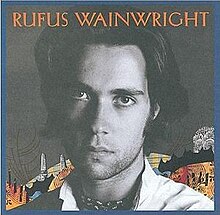
A song for April 1st: "April Fools" from Rufus Wainwright's great self-titled debut. The son of folksingers Kate McGarrigle and Loudon Wainwright III (and brother of singer/songwriter Martha Wainwright), Rufus Wainwright certainly has a musical pedigree. His 2016 Take All My Loves album is devoted to Shakespeare's sonnets!

Black and white head shot of a man; in the background is a colorful collage and the text "Rufus Wainwright" appears across the top

A poem for the start of April: Marilyn Singer's "April is a Dog's Dream" goes out to all the dogs I've passed on my outings who are having such a tough time with social distancing. Hang in there, dogs!

April Is a Dog's Dream

april is a dog's dream
the soft grass is growing
the sweet breeze is blowing
the air all full of singing feels just right
so no excuses now
we're going to the park
to chase and charge and chew
and I will make you see
what spring is all about
Works Cited

Singer, Marilyn. "April is a Dog's Dream." Poetryfoundation.orghttps://www.poetryfoundation.org/poems/147302/april-is-a-dog39s-dream. Accessed 1 April 2020.

Wainwright, Rufus. "April Fools." Rufus Wainwright, 1998, Dreamworks.