09 December 2019

Test on Chapters 1-19

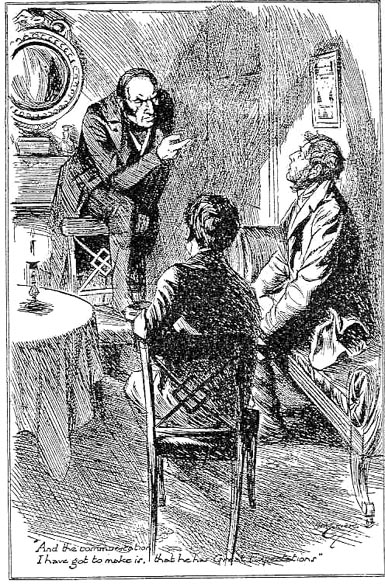
Image result for jaggers you have great expectations
"And the communication that I have got to make is, that you have Great Expectations."

Best wishes on the test! When you are finished, please check your work, hand in the test, and begin the next reading assignment.

Homework: read and annotate chapters 20-22 (think about Pip's expectations of London and look for examples of motifs). Post one of your annotations (i.e., a question, an observation, a connection, etc.) on our Great Expectations discussion forum: greatexpectations9h.blogspot.com

06 December 2019

Day Ten GE

Do Now: Is the desk you are sitting at real? How do you know?

Today's Learning Target: 

I will be able to understand Plato's allegory of the cave and connect the concept to Great Expectations.
I will know that I have hit the learning target when...
-I can describe in my own words what Plato's cave is about.
-I can make a connection between the enlightenment Plato discusses in his text and Great Expectations.

Agenda:
  1. Plato's Cave: In the dark or seeing the light?
  2. Test Review (review materials on pp. 7-10 of linked document)
  3. Part I: Pip's Development http://greatexpectations9h.blogspot.com/
  4. Exit Ticket: In one word, describe Pip as he is bound for London at the end of Part I.
HW: use the review materials to study for the test and post a comment or question on the discussion blog (feel free to respond to one another's comments/questions). Also, read chapter 20.
Important upcoming dates: 
-First class of next week: Test on Part I (Chapters 1-19)
-student-led blog on Great Expectations

02 December 2019

Day Nine GE


Do Now: What associations come to mind when you think about the novel's title: Great Expectations?

Today's Learning Target: 
I will be able to trace Pip's development from the churchyard of Chapter 1 to the London-bound coach of Chapter 19.
I will know that I have hit the learning target when...
-I can create a timeline showing important events in Pip's life during this span.
-I can make an assertion statement using a subordinating conjunction that claims what values of Pip's have changed in this time and which remain.

Agenda:
  1. Chapters 18-19
  2. Part I: Pip's Development http://greatexpectations9h.blogspot.com/
  3. Test Review Materials (on pp. 7-10 of linked document)
  4. Exit Ticket: The most memorable moment of book one is...
HW: read and annotate the allegory of the cave excerpt from Plato's Republic or watch this short video that illustrates Plato's allegory of the cave and take notes on it. Bring in at least one question you have or one connection you can make to Great Expectations. 

Important upcoming assignments: 
-Friday, 6 December: Test on Part I (Chapters 1-19)  Test postponed to 12/9 for purple and 12/10 for green
-student-led blog on Great Expectations

25 November 2019

Day Eight GE

"...destined never to be on the rampage again while she was the wife of Joe."
Do Now: As Pip leaves Satis House, he observes, "What could I become with these surroundings? How could my character fail to be influenced by them? Is it to be wondered at if my thoughts were dazed, as my eyes were, when I came out into the natural sunlight from the misty yellow rooms?" (Dickens 94) 

Later, Pip's annual visits to Satis House and Miss Havisham seem to cast a spell on him. He admits that the place "bewildered me, and under its influence I continued at heart to hate my trade and to be ashamed of home." (Dickens 125)

Some situations overwhelm us and threaten to change who we truly are. Consider the above examples, an example from another literary work, or an example from your own life (perhaps something you described in your Adobe Spark video). How can we stand up to such powerful influences?

Today's Learning Target: 
I will be able to distinguish between effective and ineffective motif quotations.
I will know that I have hit the learning target when...
-I can explain the difference between an effective and ineffective motif quotation.
-I can work with my group to locate at least three effective quotations for our assigned motif.

Agenda:
  1. Pip's influences
  2. Motif Work in Groups
  3. Nicholas Nickleby comparisons
  4. Exit Ticket: What is an important way that Pip has changed over the first hundred pages of the novel?
HW: read chapters 18-19 and make at least three annotations (n.b., an annotation = a highlighted line/passage + a question/inference/prediction), one of which involves a motif. Catch up on any readings you have missed!

Coming up...
-test on Book I (Chapters 1-19) Friday, 6 December
-blogging on Great Expectations 

22 November 2019

Day Seven GE

Do Now: Thinking symbolically, what do ghosts or hands or chains represent?

Today's Learning Target: 
I will be able to define what a motif is and identify examples of motifs in Great Expectations.
I will know that I have hit the learning target when...
-I can explain what a motif is and why authors use them.
-I can point to at least two examples of motifs in the novel and big ideas they might emphasize.

Agenda:
  1. Questions on 11-13
  2. The Wonderful World of Motifs!
  3. Look back over your notes on chapters 1-13. Do any of these chapters contain examples of a hands, ghosts, or chains motif? Locate a passage that you think does include one of the motifs and take note of the page number and the context.
  4. Exit Ticket: what big idea addressed in the novel most resonates with you?
HW: read chapters 14-17 and make at least three annotations (n.b., an annotation = a highlighted line/passage + a question / inference / prediction).

19 November 2019

Day Six GE

Satis House = Haunted House
Do Now: We meet some new characters in chapters 8-10. Select an annotation you made about one of these characters to share with your group. How is this character similar to or different from other characters we've met?

Today's Learning Target: 

I will be able to generate a list of big ideas that are introduced in the novel's early chapters.
I will know that I have hit the learning target when...
-I can connect specific events to big ideas.
-I can make an inference about the author's attitudes towards the big ideas by thinking about the tone in the passages I've found.

Agenda:

  1. Unit Overview / Big Ideas
  2. Challenges
  3. Finishing the Victorian Era webquest
  4. Exit Ticket: what big idea addressed in the novel most resonates with you?
HW: For Thursday, please make sure you have filed your Adobe Spark video in your English folder. For Friday, read chapters 11-13 and make at least three annotations (n.b., an annotation = a highlighted line/passage + a question / inference / prediction).

Please complete this form with your preferences for topics and motifs: https://docs.google.com/forms/d/e/1FAIpQLSeMmI_xaTd_tMzG7YiMhSRFdKyTNu7r9kfPRGxyfeL9cDBwNw/viewform?usp=sf_link 

18 November 2019

Day Five GE

Do Now: Make connections to the Victorian Era research you have done. Talk to your group about how the novel includes hulks and dame schools. What is an area of Victorian Era research that most puzzles or intrigues you?

Today's Learning Target: 

I will be able to make a debatable claim about a character and support it with evidence from somewhere in the chapters we have read.
I will know that I have hit the learning target when...
-I can make an assertion about one of the characters so far that demonstrates inferential thinking.
-I can support my assertion with an appropriate example from the chapters we have read.

Agenda:

  1. Characterization and Inference
  2. Setting up the next issue
  3. Chapter 8 / Adobe Spark work time
  4. Exit Ticket: what have you found enjoyable/frustrating about the novel so far?
HW: read chapters 8-10 and make at least three annotations (n.b., an annotation = a highlighted line/passage + a question / inference / prediction). Continue working on your Adobe Spark project.